

About the author : Melbourne Stairs

Most staircases blend into the background, but yours shouldn’t. Custom staircases Melbourne homeowners trust combine comfort, safety, and style without compromise. From riser height to handrail design, the right details make daily use smoother and keep your home safe under NCC and BCA rules. Keep reading to find out how expert staircase design Melbourne can bring all these elements together for your next project.
Comfort in Staircase Design
Creating a comfortable staircase involves more than meets the eye. It’s about the intricate details that enhance everyday usability while maintaining aesthetic appeal.
Optimising Riser Height and Tread Depth
The first step to a comfortable staircase is getting the riser height and tread depth just right. Most people think any step size will do, but precise measurements make a world of difference. For a smooth ascent and descent, each riser should be consistent, generally ranging between 150 to 180 mm. This range prevents excessive strain on your legs as you climb.
Let’s talk about tread depth. Imagine stepping comfortably without feeling cramped; that’s what a depth of 250 to 300 mm offers. It provides ample space for your foot, ensuring stability with every step. Keep these measurements in mind when planning your staircase, and you’ll notice the subtle comfort each time you walk up or down.
Selecting Non-Slip Finishes
Safety doesn’t have to sideline style, especially when you choose the right finishes. Non-slip finishes are crucial for preventing accidents, particularly in busy households. Materials like rubber or textured timber increase traction, reducing the likelihood of slips, especially in wet conditions.
Consider finishes that blend seamlessly with your interior design. While safety remains the priority, you can still achieve a sophisticated look. For instance, non-slip coatings on timber stairs not only enhance safety but also highlight the natural beauty of the wood. This method keeps your staircase looking stylish and secure at the same time.
Enhancing Comfort with Staircase Lighting
Lighting plays a pivotal role in comfort and safety. Well-placed lights illuminate each step, reducing the risk of missed steps in dim conditions. LED strip lights or recessed lighting beneath each tread can create a warm and inviting atmosphere.
Moreover, thoughtful lighting design elevates the staircase’s visual appeal. It highlights architectural features, creating a focal point that draws the eye. By integrating LED lights, you ensure that your staircase remains safe and stunning at all times.
Safety Considerations
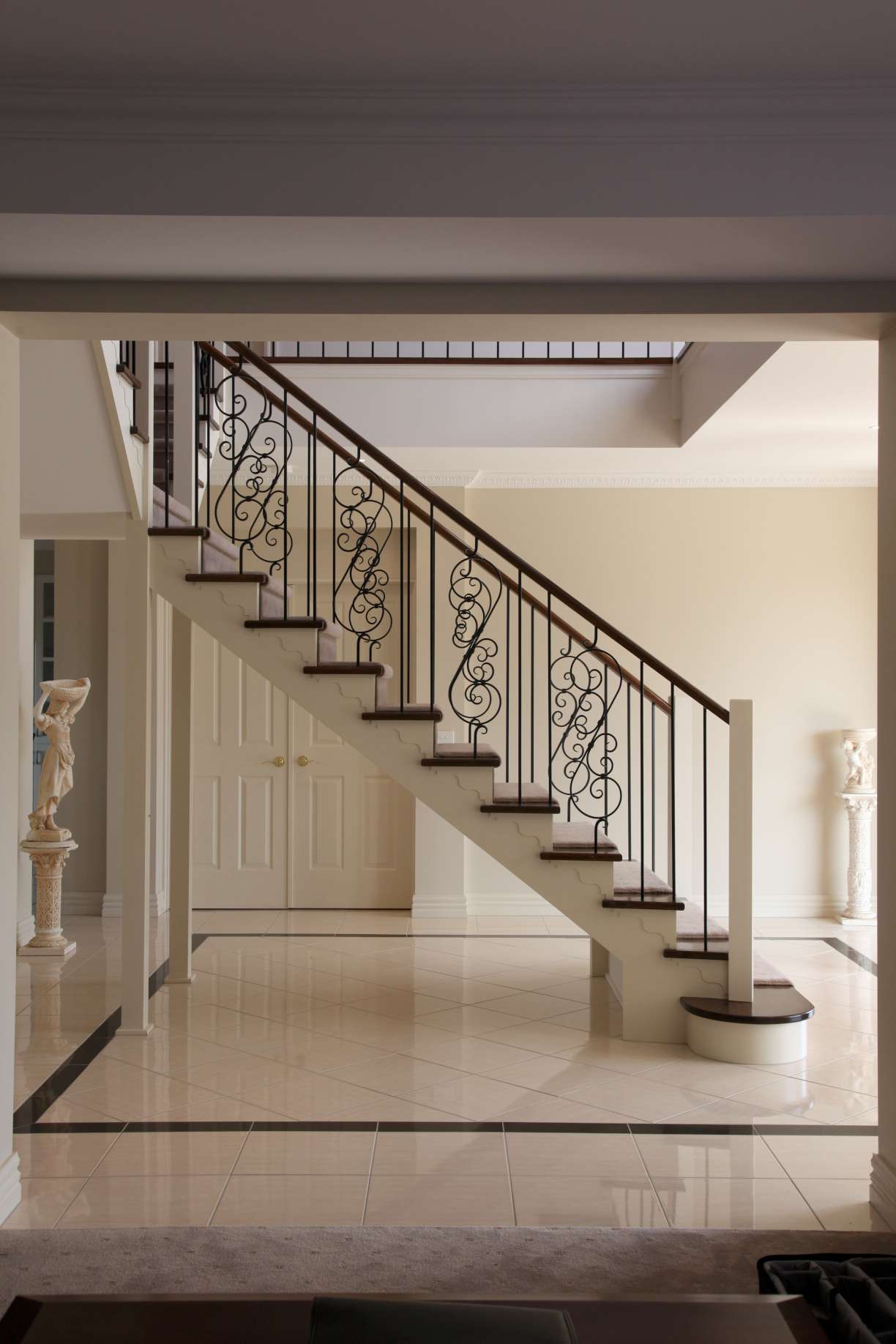
Safety is fundamental in staircase design, governed by stringent codes and requirements that ensure your staircase is both functional and secure.
Meeting NCC/BCA Stair Requirements
Compliance with the NCC and BCA is non-negotiable. These regulations dictate crucial aspects like riser heights, tread depths, and balustrade height for safety. Adhering to these standards means your staircase is built to protect all users, from children to elderly family members.
Checking these compliance boxes isn’t just about avoiding penalties; it ensures peace of mind. Knowing that your staircase meets these safety standards allows everyone in your home to move with confidence and comfort.
Balustrade and Handrail Design
Balustrades and handrails aren’t just decorative. They’re essential safety features that prevent falls and provide support. When designing your staircase, select materials and styles that complement your home’s interior while offering robust support.
Handrails should be at a comfortable height for all users, typically between 865 and 1,000 mm. This range ensures everyone can grip securely. Balustrades, meanwhile, need to be strong and durable, offering an additional layer of protection. Both elements combine to enhance safety without compromising on style.
Importance of Stair Nosing
Stair nosing is often overlooked, yet it plays a critical role in enhancing both safety and durability. By extending the tread, nosing adds space for your foot, reducing slips. It’s essential for protecting the edge of each step from wear and tear, maintaining the staircase’s appearance over time.
When choosing stair nosing, consider contrasting colours or textures. This contrast increases visibility, especially in varied lighting conditions, making each step stand out clearly. Prioritising stair nosing not only preserves your staircase but also ensures each step is secure.
Style and Material Choices
The materials and design choices you make for your staircase significantly influence its overall impact on your home.
Timber Stairs: Victorian Ash, Spotted Gum, American Oak
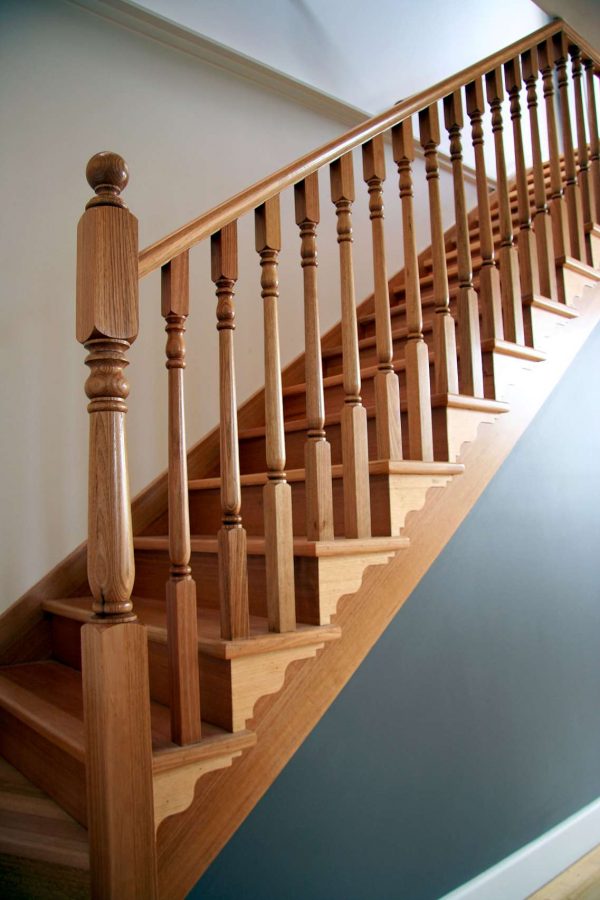
Timber stairs are timeless, offering warmth and a touch of nature in your living space. Choosing the right timber, like Victorian Ash, Spotted Gum, or American Oak, brings unique characteristics to your staircase. Each type has its distinct grain and colour, allowing you to match your home’s style perfectly.
Victorian Ash provides a light, contemporary look, while Spotted Gum boasts rich, earthy tones. American Oak delivers classic elegance with its smooth finish. Selecting the ideal timber involves considering your home’s existing décor and how your staircase can enhance it.
Modern Looks: Floating and Cantilever Stairs
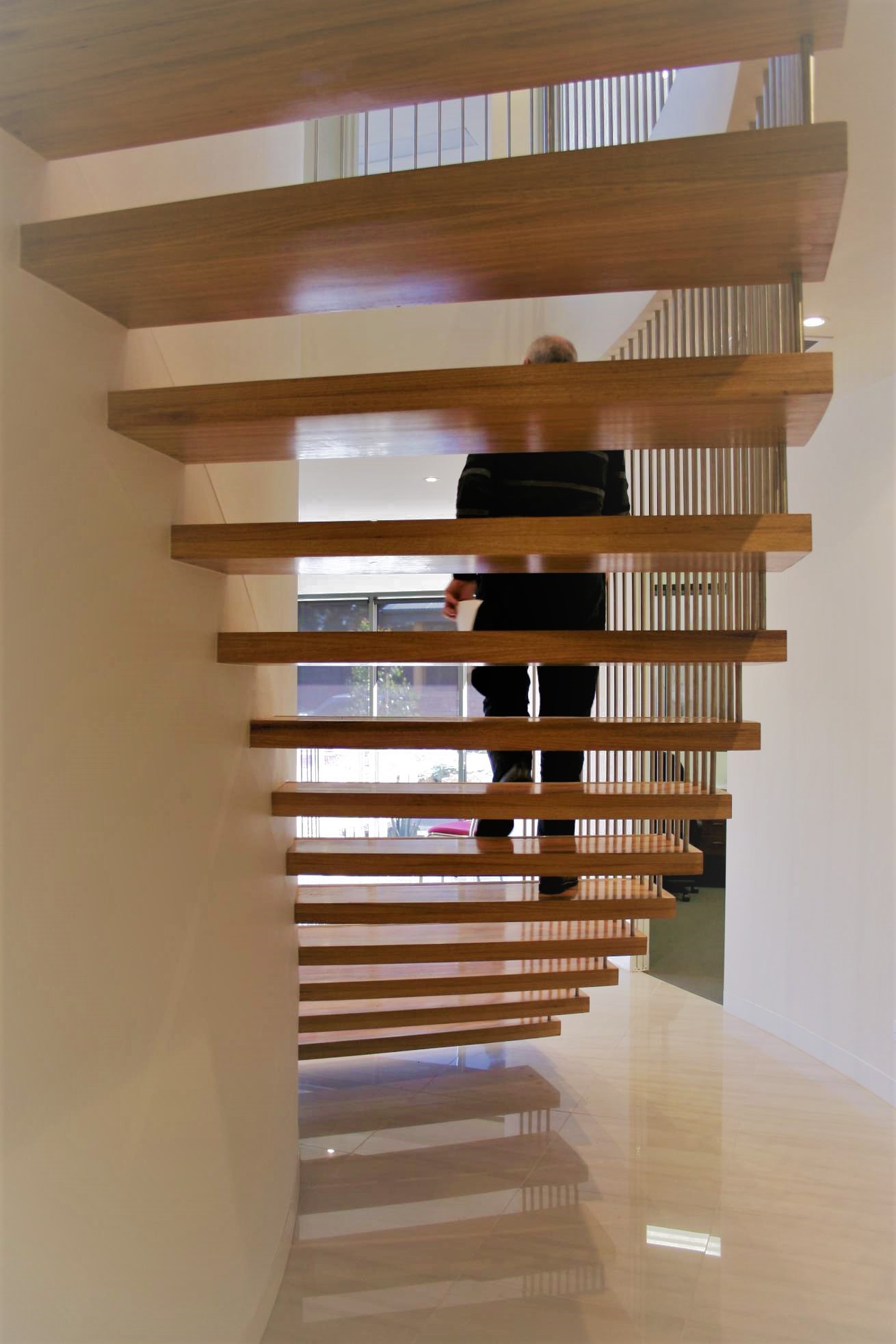
If you’re after a modern aesthetic, consider floating stairs or cantilever stairs Melbourne loves. Floating stairs create an illusion of space, offering a minimalist look perfect for open-plan homes. Their sleek design makes them a popular choice for those aiming for a cutting-edge interior.
Cantilever stairs, on the other hand, make a bold statement. With treads jutting out from a central spine, they offer a sense of drama and sophistication. These stairs are perfect if you want a striking centrepiece that captures attention. Both styles provide the wow factor while maintaining structural integrity.
Incorporating Glass Balustrades and Steel Spine Systems
For those who love contemporary design, glass balustrades and steel spine systems are a winning combination. A glass balustrade Melbourne homeowners choose offers an unobstructed view, creating an illusion of space and openness. It’s an elegant solution that pairs beautifully with any style of staircase.
Steel spine systems reinforce the structure while adding a modern twist. They support the staircase’s weight, allowing for clean lines and a minimalist appearance. This combination ensures your staircase is not only robust but also a stunning visual feature within your home.
Frequently Asked Questions
How do I choose the right riser height for my staircase?
Select a riser height between 150 and 180 mm to ensure comfort and prevent strain. This range is within the NCC/BCA requirements and provides a smooth transition between steps.
What materials are best for non-slip stair finishes?
Rubber and textured timber are excellent options for non-slip finishes. They enhance traction and safety without sacrificing style, making them suitable for busy households.
Why are glass balustrades popular in modern homes?
Glass balustrades offer an open and airy feel, complementing contemporary interiors. They provide safety without obstructing views, making them a popular choice for modern staircase designs.
What are the benefits of LED lighting for staircases?
LED lighting enhances visibility on each step, reducing the risk of accidents. It also adds aesthetic appeal, highlighting architectural features and creating a welcoming ambiance.
How does stair nosing improve safety?
Stair nosing extends the tread, offering additional space for your foot and reducing slips. It protects the step edges, ensuring durability and maintaining the staircase’s appearance over time.


